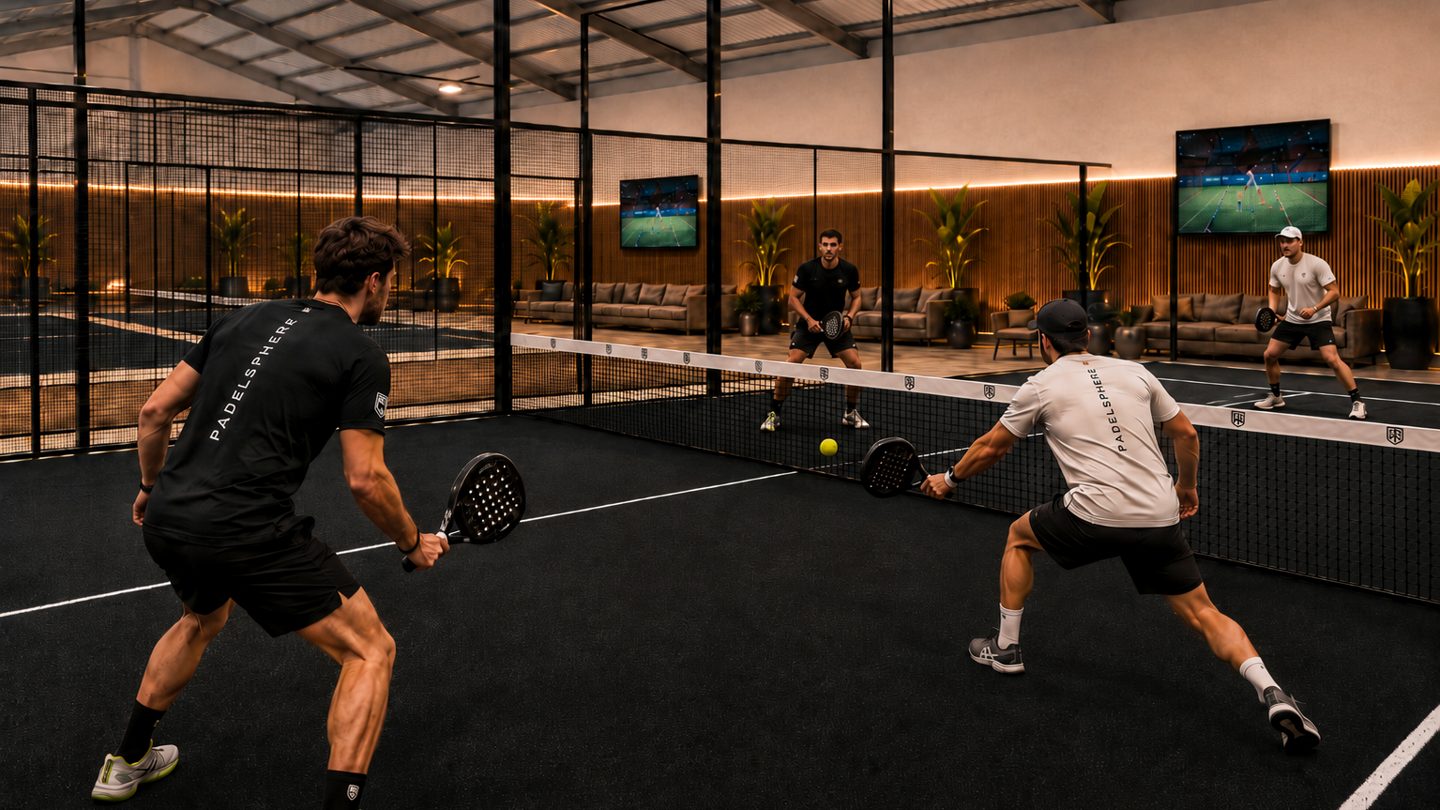
Padel looks familiar and plays like nothing else. If you know roughly what a tennis scoreboard looks like you are already most of the way there, but the serve and the walls trip everyone up at first. Here are the rules, in plain English, so you can walk on and play a real game.
The basics in thirty seconds
Padel is played in doubles on an enclosed court about a third the size of a tennis court, with glass walls and mesh fencing. You serve underarm, you score exactly like tennis, and after the ball bounces on the floor you are allowed to play it off the walls. That is genuinely most of it. The rest is detail.
Score like tennis, serve underarm, use the walls. Learn those three things and you can play today.
How to serve
The serve is the biggest difference from tennis, and the reason beginners can compete on day one.
- You serve underarm. Bounce the ball once on the floor behind the service line, then hit it at or below waist height.
- It goes diagonally into the service box on the far side, the same as tennis.
- The serve must bounce in that box. After bouncing it can touch the side glass and still be good, but if it hits the metal fence before your opponent plays it, that is a fault.
- You get two attempts, just like tennis. Two faults is a lost point.
No towering first serves, no double-fault nerves. That single change is why padel is so welcoming to newcomers.
How to score
If you have ever glanced at a tennis match, you already know this.
- Points run 15, 30, 40, game.
- Six games wins a set, and you need to be two games clear.
- Matches are usually best of three sets.
- At 40-40 (deuce), some games play a sudden-death "golden point" instead of advantage. The receiving pair chooses which side receives. Casual games often just play advantage, whichever you prefer.
When the walls are in play
This is the part that makes padel padel, and the bit that feels strange for the first ten minutes.
- The ball must always bounce on the floor first. After that bounce, it can come off your glass walls and you can still play it back.
- You cannot let the ball hit your wall before it has bounced on the floor. If it hits your glass on the full, the point is your opponent's.
- Your shot has to land in your opponent's court. If it hits their wall or fence before bouncing on their floor, you have lost the point.
- You can volley, hitting the ball before it bounces, at any time except when returning a serve, which must bounce first.
Once it clicks, the walls are the best part. Points last far longer than in tennis, and the game becomes about position and patience rather than raw power.
What counts as out
Keep these simple markers in mind:
- A shot is good if it bounces inside your opponent's court.
- Hitting the ball into the fence or glass on your opponent's side before it bounces is out.
- Once the ball has bounced in, it can rebound off their walls and stay live. Hitting the ball over the fence and out of the court wins you the point.
- A double bounce on your side loses the point, same as tennis.
Common beginner questions
Do I have to let the serve bounce?
Yes. The returner must let the serve bounce once before hitting it. After that first shot, normal play resumes and you can volley freely.
Can I use my own back wall?
Yes, as long as the ball has bounced on your floor first. Letting a hard shot pass you, come off your back glass and then playing it is a completely normal, and very satisfying, part of the game.
Do I need my own racket?
No. Rackets are £3 to hire and balls are £7 a tube at reception, and racket hire is free with any membership. Just turn up in trainers.
Where to play padel in the North East
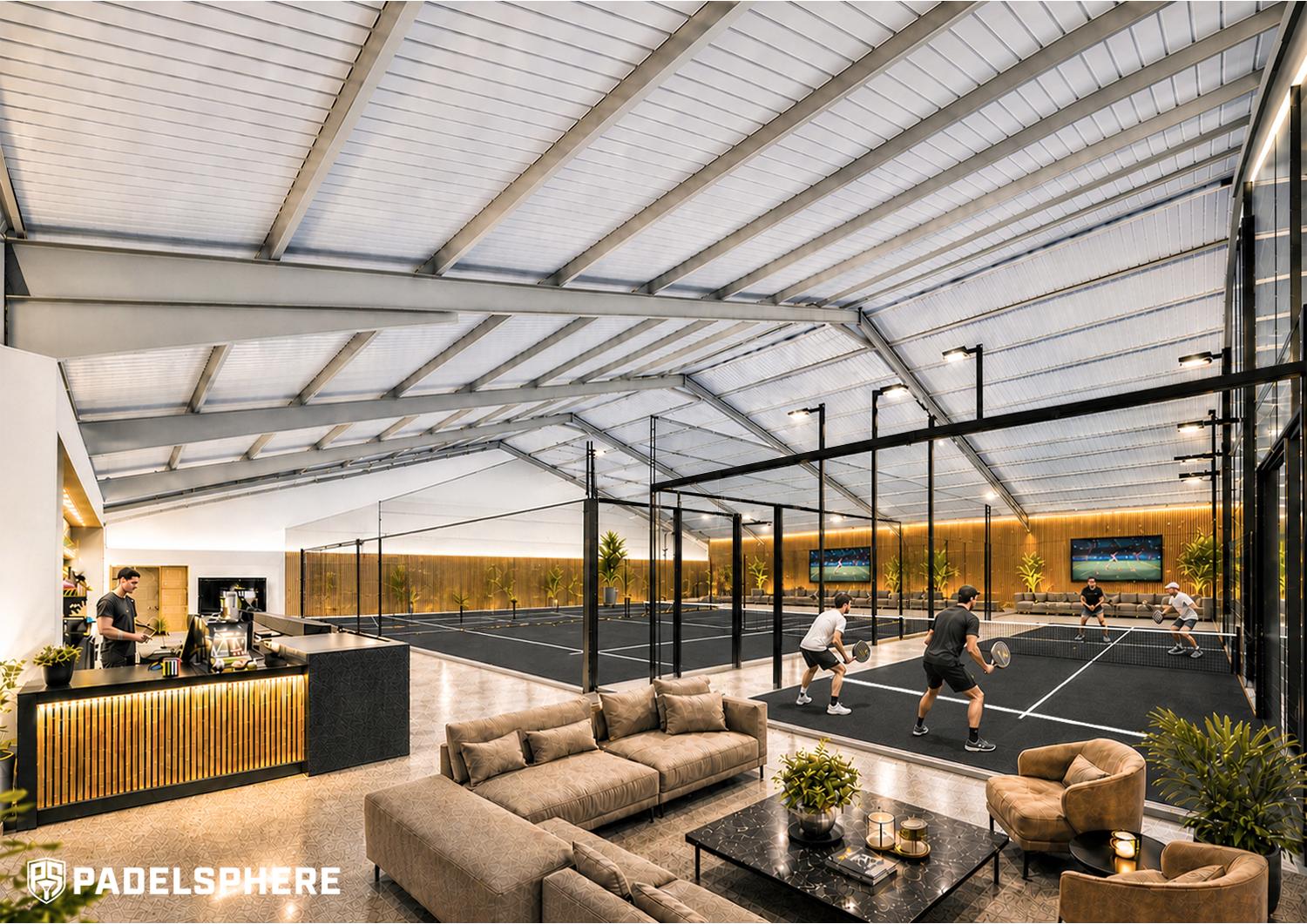
Padelsphere in Blyth is Northumberland's first venue built for padel from the ground up: three full panoramic glass courts, indoors and heated, so nothing gets rained off. We are on Spencer Road, around 20 minutes from Newcastle and minutes from the Northumberland coast, with free on-site parking, a licensed bar and cafe, and two infrared saunas.
New to the sport entirely? Start with what is padel, a complete beginner's guide. Coming across from tennis? Read padel vs tennis, what's the difference. Or see the full picture of where to play padel near Newcastle.
Ready to try it?
Book a court and split it between players from just £7 each off-peak. Pick your time on the booking page, or lock in launch pricing as one of our first 100 members. Still got questions? The FAQs cover almost everything.
Claim your founding number
The first 100 members, ever. Rate locked for two years, and it sits on top of whichever tier you choose. Then it closes for good.
Become a founding member